VENICE-O-METER 8
Historical detective novel set in 1840’s Venice
“The Venetians are traders, Yashim. Everything in Venice is for sale.”
“So this is Venice,” Palweski muttered […] “How ghastly”
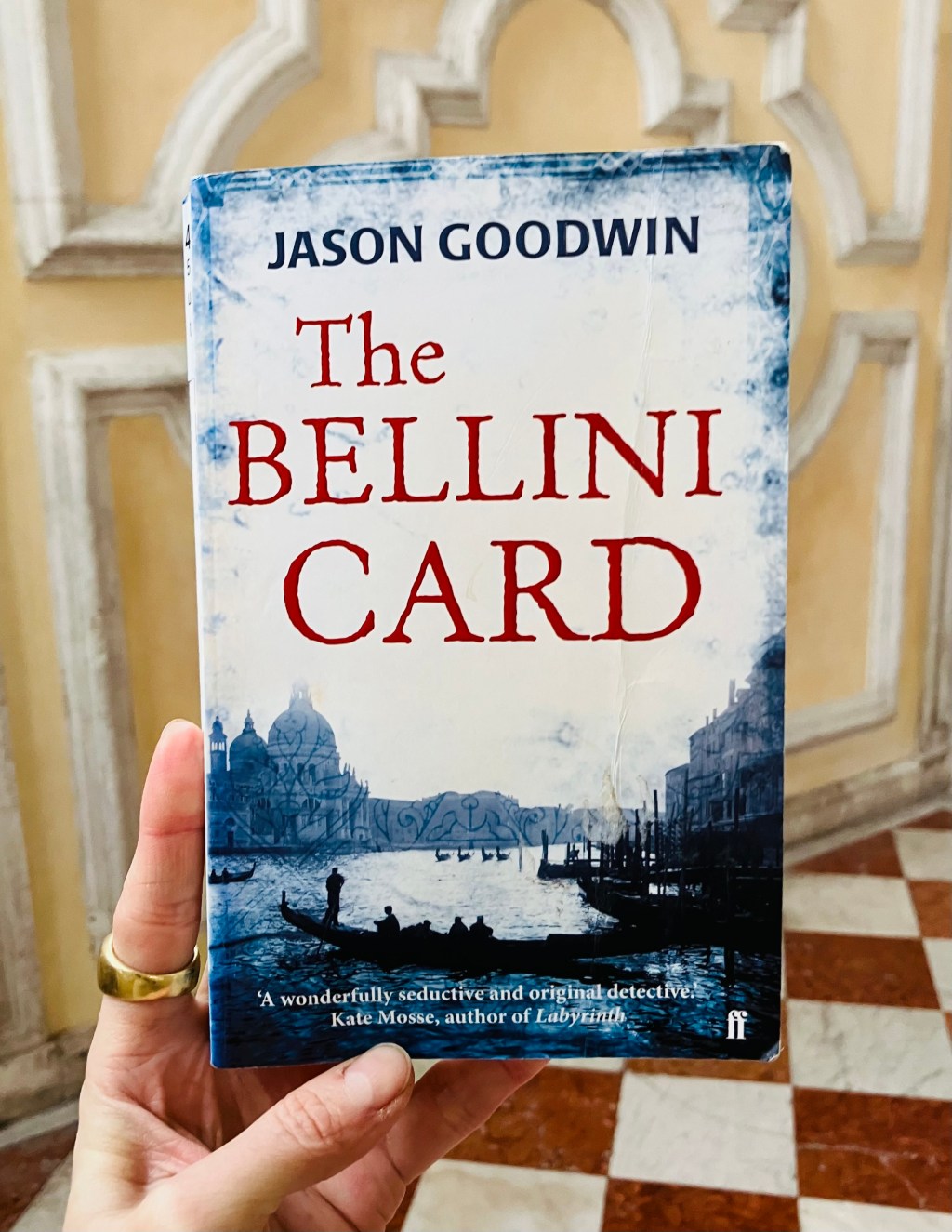
One of the highlights of my life in Venice so far was my aunt Deborah’s visit — we followed in the steps of Donna Leon’s Commissario Brunetti and discussed the motivations — and itineraries — of the characters in Patricia Highsmith’s Those Who Walk Away. Next time she’s in town, we’re sure to check out the places (see Reading Venice Map) mentioned in Jason Goodwin’s The Bellini Card, which she recommended to me.
Jason’s Goodwin’s prose is at its best, agile and precise, when describing places — and food. What’s especially enjoyable, in that regard, is that The Bellini Card highlights locations not often featured in Venice-centered novels, for instance the Fondaco dei Turchi and the Campo dei Mori. These locations are meaningful to the novel’s main characters, who are visiting from Istanbul, and remind us how closely the fortunes of Venice and Constantinople were once bound.
I wasn’t as impressed with Godwin’s knack for plot and characterization — though judging by the novel’s enthusiastic reviews, I realize my sentiment is not shared by many. The story seemed unnecessarily convoluted, as if making it more complicated, more absurd and if adding (seemingly) countless characters would make it compelling — it doesn’t.
The Austrians click their heels, just follow orders and say “Ach” a lot. The Italians are endearing or unctuous and cunning. The prostitute has a heart of gold and claps her hands with child-like joy when her john takes her for ice-cream.
And the sex scenes (involving a eunuch, no less) were more hilarious than titillating, intertwining clichés and clunkiness: “She threw herself back in a slender arch, stabbing her fingers into the sheets, her wild golden hair flying across the pillow.” (Cringe)
 Reading Venice